HACCP asks you to know, at every critical point, whether a food is still in its safe range, to act when it is not, and to prove both afterwards. For chilled and frozen goods that point is almost always a temperature. Sensors that measure it continuously turn the clipboard round into a record that builds itself, and they tell you about a deviation while there is still time to save the goods.
This guide explains what HACCP asks of temperature monitoring, where paper logs reach their limits, what an automated setup looks like, and what to check before you rely on it.
What HACCP means for temperature
HACCP stands for Hazard Analysis and Critical Control Points. In the EU, Regulation (EC) No 852/2004 on the hygiene of foodstuffs (Article 5) requires every food business operator to put in place, run and maintain procedures based on its principles. Each business writes its own HACCP plan: it looks at its processes, finds the hazards, and defines where they must be controlled.
For anything that is stored cold, temperature is the classic critical control point (CCP). The seven principles translate into five practical tasks:
- Define the critical points. Which cold rooms, freezers, counters and display cabinets hold food whose safety depends on temperature?
- Set the critical limits. Which range applies to each point, for example 0–2 °C for fresh fish or −18 °C or colder for frozen food? The values come from your HACCP plan, product specifications and national guidelines.
- Monitor. Check each point often enough to catch a deviation before it becomes a hazard.
- Correct. When a limit is crossed, act according to a defined plan: repair, relocate, assess or discard the goods.
- Document and verify. Keep records of the readings and the actions taken, and check regularly that the system works.
Where paper logs reach their limits
Many stores and kitchens still monitor with a thermometer and a form on the wall: twice a day, someone walks round and writes down a number per fridge. That fulfils the letter of the duty in many cases, but it leaves three gaps.
The time between rounds. A reading at 8:00 and one at 16:00 say nothing about what happened in between. A door left open after a late delivery, a compressor that fails at night, a defrost cycle that runs too long: the form never sees them, and the goods are already warm when someone notices.
The quality of the record. Rounds get skipped on busy days, numbers are filled in from memory, handwriting is hard to read. In an inspection, a perfectly even column of "3 °C" convinces nobody.
The effort. In a supermarket with dozens of cooling units, the rounds add up to hours a week. That time is spent writing numbers, not acting on them.
What an automated setup looks like
Automatic temperature monitoring replaces the round, not the responsibility. The structure is simple:
- Sensors at every critical point. A temperature sensor sits in each cold room, freezer, counter and cabinet and sends a reading at a fixed interval, typically every few minutes. A door contact from the presence and access range can tell you why a temperature rose.
- A gateway that collects them. The baiond Gateway receives the readings by radio, usually over LoRaWAN, which reaches through cold-room walls; the sensors run on battery, so nothing needs to be wired.
- Limits per point. In the Space System, each sensor belongs to a place: store 04, fresh fish counter. Each place carries the limit from your HACCP plan, plus a tolerance period so that a short door opening does not raise an alarm.
- An alert with a reason. When a limit is crossed for longer than the tolerance, the responsible person gets a message. baiond's AI agents add what they can see: how long the deviation lasted, what else happened at the same time, and what to do next.
- A record that keeps itself. Every reading, every deviation and every confirmation is stored with a time stamp. For an inspection you export the period you need instead of searching through folders.
A worked example from the store
Two situations show the difference between a reading and an answer.
The cold room at night. The morning team asks whether anything happened overnight. The record shows that the door contact reported the door open from 22:41 to 23:19, 38 minutes, after the last delivery was booked in at 22:36. The air temperature climbed to 9.4 °C and was back below the 4 °C limit at 00:05; the compressor ran at full load for 84 minutes to recover. The deviation is already in the HACCP log. The recommendation: check the door closer before the next delivery, confirm the log entry, and assess the goods as the HACCP plan requires. A paper round at 8:00 would have shown 3 °C and nothing else.
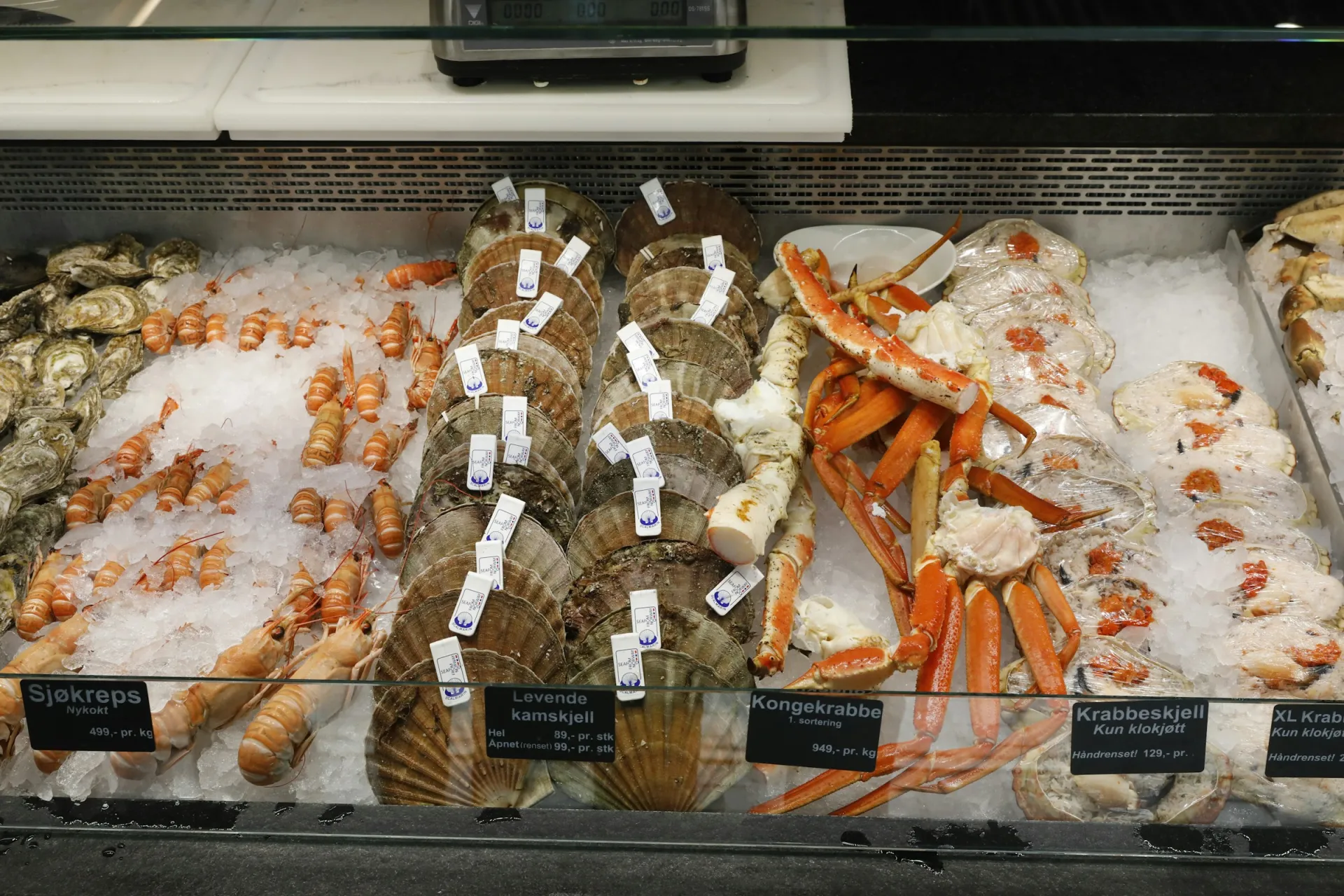
The fish counter in the afternoon. The counter has a limit of 0–2 °C. At 5.8 °C for 24 minutes, the alert goes out with three observations: the compressor has been running continuously since 15:04 without reaching its set point, the counter was opened 11 times in 30 minutes, twice as often as usual, and the sales floor is 2 °C warmer than on an average day. The recommendation: inspect the refrigeration unit now and move the products if necessary. The corrective action and its confirmation become part of the record.
You can try both questions yourself on the supermarkets page.
What to check before you rely on sensors
Automatic monitoring is only as good as its setup. Clarify these points with your supplier and your food-safety officer:
| Question | Why it matters |
|---|---|
| Is every critical point from the HACCP plan covered? | A gap in the sensor map is a gap in the record. |
| How often does each sensor send, and what happens when one goes silent? | A missing reading must raise an alert of its own. |
| Where does the sensor sit in the unit? | Air at the door warms faster than the product core; the position should match what the limit refers to. |
| How are sensors calibrated or checked? | Verification is one of the HACCP principles; keep a record of the checks. |
| Who receives an alert, and who covers nights and weekends? | An alert nobody reads is no control. |
| How are corrective actions confirmed and stored? | The record has to show what was done, not only what was measured. |
| How long is the data kept, and can it be exported? | Inspections ask for periods, often months back. |
| Does the system still record when the internet is down? | The gateway should buffer readings and send them later. |
Frequently asked questions
Does a temperature sensor replace the handwritten HACCP log? It records each point continuously and keeps the history, so the record builds up without a round. Whether it formally replaces your paper records is a question for your food-safety officer or inspection authority; in many businesses the automatic record becomes the main record, with spot checks by hand as verification.
Which limits should I set? The ones in your HACCP plan. Product specifications and national guidelines are the usual source, and they differ by product: fresh fish, minced meat, dairy and frozen food each have their own range.
What about short peaks during deliveries or defrosting? A tolerance period per point keeps short, expected peaks out of the alerts while still recording them. Only a deviation that lasts longer than the tolerance becomes an alarm.
Does this only work in supermarkets? No. The same setup works in commercial kitchens, canteens, bakeries, butchers, pharmacies and warehouses: anywhere a temperature is a critical control point.
How do we start? With the list of critical points from your HACCP plan. It tells you how many sensors you need and where they go. Talk to us and we will plan the first site with you.

