The roof reports the damage before the claim does.
Moisture, vibration, tilt and temperature sensors on roofs and in halls flag leaks, hail and snow load as they happen. One data basis for risk managers, maintenance and underwriting.

- Section B4 91% RH
- Sections in range 27/28
- Rain, 24 h 31mm
What goes wrong quietly.
Large losses, found late
Water damage, fire, a failed plant, a break-in: the claim arrives when the damage is done. The zones that matter most are not watched between inspections.
Objects nobody can walk
Commercial halls, shopping centres, office complexes, warehouses. Complex structures with roofs that no one sees for months.
Reactive claims handling
Detection comes too late, consequential costs and downtime follow, and maintenance runs on the calendar instead of on the condition.
Reporting duties that keep growing
EU taxonomy, CSRD, ESG: risk management is expected to rest on data, not on estimates.
Questions you would ask on site.
Three situations from this industry, answered the way baiond answers: the readings, the reasons, a recommendation and the source. Tap one or type your own.
Checked Moisture sensors · Roof temperature · Weather data · baiond Gateway How did baiond know?
- Sensor
- baiond Gateway
- Space System
- AI agent
The sensor reports to the baiond Gateway, the Space System puts the reading in context (location, threshold, history), and the AI agent turns it into an answer.
Source: Moisture sensors · Roof temperature · Weather data · baiond Gateway
- Section B4 91% RH
- Sections in range 27/28
- Rain, 24 h 31mm
Yes. Section B4 has read above 85 % RH since 02:10, while the other 27 sections stayed in range. It rained 31 mm overnight; B4 lies below the outlet that maintenance reported blocked in May.
Send maintenance to outlet B4 and the membrane seam today. Log the event now as a pre-claim note with the curve attached, so the timeline is documented before anything is repaired.
Should I set B4 to red on the object’s traffic light and notify the risk manager?
Looking closer. This is what the data shows:
Possible reasons- The reading rose in step with the rainfall from 01:40 on and has not fallen since it stopped.
- The neighbouring sections B3 and B5 stayed below 60 % RH — the water is most likely entering at one point, not across the roof.
- The roof temperature is 9 °C, so condensation is unlikely.
The sensor reports to the baiond Gateway, the Space System puts the reading in context (location, threshold, history), and the AI agent turns it into an answer.
- Sensor
- baiond Gateway
- Space System
- AI agent
Source: Moisture sensors · Roof temperature · Weather data · baiond Gateway
Understood. I keep watching Logistics centre North · Hall 3, roof section B4 and let you know if anything changes.
Checked Vibration sensors · Moisture sensors · Weather data · baiond Gateway How did baiond know?
- Sensor
- baiond Gateway
- Space System
- AI agent
The sensor reports to the baiond Gateway, the Space System puts the reading in context (location, threshold, history), and the AI agent turns it into an answer.
Source: Vibration sensors · Moisture sensors · Weather data · baiond Gateway
- Peak impact 9.6g
- Roofs affected 2/4
- Duration 14min
- Moisture change 0%
Two of four. Roofs R1 and R2 recorded impacts up to 9.6 g between 17:22 and 17:36; R3 and R4 stayed below the 3 g threshold. No moisture change so far — the membranes appear to be holding.
Have R1 and R2 inspected within 48 hours and keep the moisture alerts armed for 72 hours. The impact curves and the weather record are already in the object file.
Should I open an event report with the impact curves for the insurer?
Looking closer. This is what the data shows:
Possible reasons- The weather service reported hail of 2–3 cm over the site at 17:20.
- R1 and R2 face west; R3 and R4 are shielded by the taller block.
- Moisture is read at regular intervals, so a puncture shows up early rather than weeks later.
The sensor reports to the baiond Gateway, the Space System puts the reading in context (location, threshold, history), and the AI agent turns it into an answer.
- Sensor
- baiond Gateway
- Space System
- AI agent
Source: Vibration sensors · Moisture sensors · Weather data · baiond Gateway
Understood. I keep watching Retail park West · four flat roofs and let you know if anything changes.
Checked Tilt sensors · Roof temperature · Weather data · baiond Gateway How did baiond know?
- Sensor
- baiond Gateway
- Space System
- AI agent
The sensor reports to the baiond Gateway, the Space System puts the reading in context (location, threshold, history), and the AI agent turns it into an answer.
Source: Tilt sensors · Roof temperature · Weather data · baiond Gateway
- Deflection, truss 4 3.1mm
- Limit 5mm
- Snow depth 46cm
- Roof temperature -4.2°C
It is holding, with a warning. Truss 4 deflects 3.1 mm, the highest of the six and 62 % of the 5 mm limit. The others sit between 1.4 and 2.2 mm. The forecast adds another 12 cm by noon.
Schedule clearing of the section above truss 4 for this morning, before the next snowfall. Do not wait for the limit; the report with the curves goes to the site manager now.
Should I alert you at 4 mm and notify the clearing contractor?
Looking closer. This is what the data shows:
Possible reasons- Deflection has grown 0.8 mm since midnight, in step with the snowfall.
- The roof temperature is −4 °C, so the snow is dry and light; a thaw with rain would add the most weight.
- Truss 4 carries the section next to the higher roof, where drifting snow collects.
The sensor reports to the baiond Gateway, the Space System puts the reading in context (location, threshold, history), and the AI agent turns it into an answer.
- Sensor
- baiond Gateway
- Space System
- AI agent
Source: Tilt sensors · Roof temperature · Weather data · baiond Gateway
Understood. I keep watching Production hall South · six roof trusses and let you know if anything changes.
Answers are generated by AI, may contain mistakes and use example values. Please don’t enter personal data. Privacy
Where the sensors sit.
Every dot is a sensor family in its typical place. Select one to see what it measures and what baiond does with it.
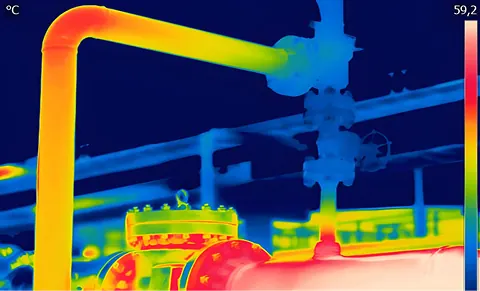
baiond equips an insured object with 30 to 50 sensors per roof: moisture, vibration, temperature, tilt, UV and weather. Every roof section reports continuously to the platform, which connects to your existing systems through an API and gives the risk manager, maintenance and underwriting their own dashboards.
Each roof and each object carries a traffic light. A leak, a hail impact, a snow load or a dew point shows up as a warning with the reading, the reason and a recommended action, soon after it starts instead of weeks later. Over time the record becomes the basis for maintenance cycles, for risk assessment and for premium design, and it supplies data for certifications such as LEED, BREEAM, klimaaktiv and ÖGNI.
-
-
-

-

-



The same site, run differently.
A leak shows up as a stain on the ceiling, weeks later.
The moisture sensor flags it soon after it starts.
Hail on Tuesday, the claim on Friday, the inspection in three weeks.
Impacts per roof, recorded as they come in, with the weather record next to them.
Snow load is a guess made from the ground.
Deflection per truss, a traffic light per object.
The premium is priced on the claims history.
The documented condition of each object can feed into pricing.
In use at and in partnership with


Your industry guide
One PDF for your industry: the questions baiond answers there, the sensors that measure it and what changes on site.
What managers ask before they start.
What does roof monitoring on an insured object look like?
A hall or logistics centre gets 30 to 50 sensors per roof: moisture, vibration, temperature, tilt and UV, plus weather data for the site. They report to the baiond platform, which connects to your existing systems through an API. Risk managers, maintenance and underwriting each get their own dashboard, and every roof carries a traffic light.
Which damage can be detected early?
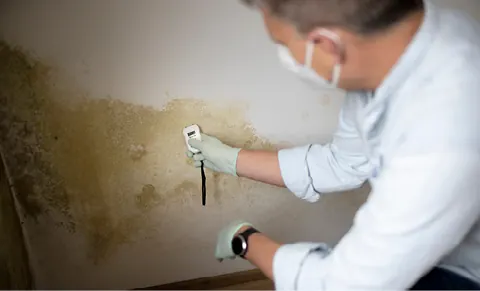
Moisture sensors catch leaks and the start of mould. Vibration sensors detect hail and storm impacts as they happen. Tilt sensors show deformation under snow load or structural failure. Temperature sensors flag dew points and condensation risk. UV and weather data track ageing and external influences.
Does the data fit into our existing systems?
Yes. The platform has an API for your claims, facility or portfolio systems, so readings, warnings and event reports land where your teams already work. The dashboards are there for the people who want the live view.
Does this help with ESG reporting, the EU taxonomy and CSRD?
It provides the data. Condition, energy, water and CO₂ per object are recorded continuously and can be exported for reports and audits. The same data supports certifications such as LEED, BREEAM, klimaaktiv and ÖGNI.
How does a pilot start?
With a site visit and a potential analysis. Then the pilot setup is configured with its dashboards, followed by ongoing optimisation with AI support and, where you want it, support for ESG reporting and certifications.
Who is this for?
Insurers and underwriters who want a data basis for risk assessment and premium design, and portfolio owners and risk managers who want fewer and smaller claims on halls, centres and office complexes.
Related industries
Same sensors, same questions, a different floor.
-
-
-



Ready to give your data a voice?
Thirty minutes with the baiond team about your site and your questions. No slides.
Request a consultation