Green Buildings: efficiency you can prove
CO₂, temperature, energy and occupancy per room, measured continuously. baiond turns a building that is green on paper into one that proves it: for certifications, ESG reports and healthy workplaces.

- CO₂ 1180ppm
- Target < 800ppm
- Temperature 23.4°C
What goes wrong quietly.
Green on paper, wasteful in reality
The energy certificate says one thing, the invoice another. Operational consumption and CO₂ run far above the projected specs, and nobody sees where the gap opens: peak loads, a ventilation plant that runs all weekend, a chiller that never quite switches off.
Air nobody measures
CO₂ climbs past 1,000 ppm in the meeting room by eleven, the humidity in the north wing invites mould, and tenants complain about a room that feels stuffy. The BMS knows the setpoint. It does not know how the room actually feels.
Rooms that heat while empty
Offices, hotel rooms and conference floors are heated, cooled and lit by schedule, not by presence. A hotel wing at 30 % occupancy runs like a full house, and the report at month end cannot say which rooms wasted the energy.
Reporting that eats weeks
LEED, BREEAM, WELL, ESG, the EU taxonomy: the auditors want readings, not estimates. Today the numbers live in the BMS, the utility portal and three spreadsheets, and someone spends a week each quarter stitching them together.
Questions you would ask on site.
Three situations from this industry, answered the way baiond answers: the readings, the reasons, a recommendation and the source. Tap one or type your own.
Checked Air quality sensor · baiond Gateway · Space System How did baiond know?
- Sensor
- baiond Gateway
- Space System
- AI agent
The sensor reports to the baiond Gateway, the Space System puts the reading in context (location, threshold, history), and the AI agent turns it into an answer.
Source: Air quality sensor · baiond Gateway · Space System
- CO₂ 1180ppm
- Target < 800ppm
- Temperature 23.4°C
No. The CO₂ concentration is currently elevated at 1,180 ppm, exceeding the target range for high cognitive performance (under 800 ppm). Temperature is fine at 23.4 °C.
Open the windows or activate ventilation for 12 minutes to bring CO₂ down to approximately 650 ppm before the meeting.
Would you like me to investigate further?
Looking closer. This is what the data shows:
Possible reasons- The room was occupied by 14 people from 09:00 to 11:30 with the door closed.
- The ventilation flap for this zone has been at 20 % since 08:00 (BMS schedule).
- Outdoor air supply is reduced building-wide because of the heat protection setting.
The sensor reports to the baiond Gateway, the Space System puts the reading in context (location, threshold, history), and the AI agent turns it into an answer.
- Sensor
- baiond Gateway
- Space System
- AI agent
Source: Air quality sensor · baiond Gateway · Space System
Understood. I keep watching HQ · Conference Room 3 and let you know if anything changes.
Checked Presence + temperature sensors · baiond Gateway · Space System How did baiond know?
- Sensor
- baiond Gateway
- Space System
- AI agent
The sensor reports to the baiond Gateway, the Space System puts the reading in context (location, threshold, history), and the AI agent turns it into an answer.
Source: Presence + temperature sensors · baiond Gateway · Space System
- Rooms empty, heated 11
- Occupancy 32%
- Room temp. 22.5°C
Yes. 11 rooms on the 3rd floor are at 22.5 °C with no presence detected for more than 4 hours. The wing is at 32 % occupancy, but its heating circuit is running as if it were full.
Set the 11 rooms to the setback temperature of 17 °C now and link the check-out signal to the room controllers so it happens automatically from tomorrow.
Would you like me to investigate further?
Looking closer. This is what the data shows:
Possible reasons- The heating schedule for the east wing is set to 'occupied' from 06:00 to 23:00 regardless of bookings.
- Check-outs this morning were not passed from the PMS to the room controllers.
- Outdoor temperature dropped to 4 °C, so the circuit has been at full flow since 09:00.
The sensor reports to the baiond Gateway, the Space System puts the reading in context (location, threshold, history), and the AI agent turns it into an answer.
- Sensor
- baiond Gateway
- Space System
- AI agent
Source: Presence + temperature sensors · baiond Gateway · Space System
Understood. I keep watching Resort · East wing, 3rd floor and let you know if anything changes.
Checked Smart meter · BMS via baiond Gateway · Space System How did baiond know?
- Sensor
- baiond Gateway
- Space System
- AI agent
The sensor reports to the baiond Gateway, the Space System puts the reading in context (location, threshold, history), and the AI agent turns it into an answer.
Source: Smart meter · BMS via baiond Gateway · Space System
- Base load Sat/Sun 48kW
- Usual weekend 19kW
- Extra energy 1390kWh
The base load ran at 48 kW from Friday 18:00 to Monday 06:00 instead of the usual 19 kW. That is 1,390 kWh more than a normal weekend, and 85 % of it sits on the ventilation and chiller circuits.
Reset the ventilation override for floors 2–4 and add a rule: an override ends at 20:00 unless someone confirms it. I can flag any weekend base load above 25 kW from now on.
Would you like me to investigate further?
Looking closer. This is what the data shows:
Possible reasons- The ventilation plant for floors 2–4 did not switch to weekend mode after Friday's event override.
- The chiller kept holding 6 °C flow temperature because the ventilation still demanded cooling.
- Outdoor temperature reached 29 °C on Saturday, which pushed the chiller to full load.
The sensor reports to the baiond Gateway, the Space System puts the reading in context (location, threshold, history), and the AI agent turns it into an answer.
- Sensor
- baiond Gateway
- Space System
- AI agent
Source: Smart meter · BMS via baiond Gateway · Space System
Understood. I keep watching Campus B · Main meter and let you know if anything changes.
Answers are generated by AI, may contain mistakes and use example values. Please don’t enter personal data. Privacy
Where the sensors sit.
Every dot is a sensor family in its typical place. Select one to see what it measures and what baiond does with it.
baiond connects the sensors in your rooms, the smart meters and the existing building automation on one platform. Every room reports CO₂, temperature, humidity and occupancy, every circuit reports its consumption, and the AI reads them together: which floor is drifting, which plant is running for nobody, which room is likely to be too stuffy for the meeting at eleven. When a value leaves its range, the right person gets a message with the reading, the reason and the next step. Ask in plain language, and the answer comes with its source.
-
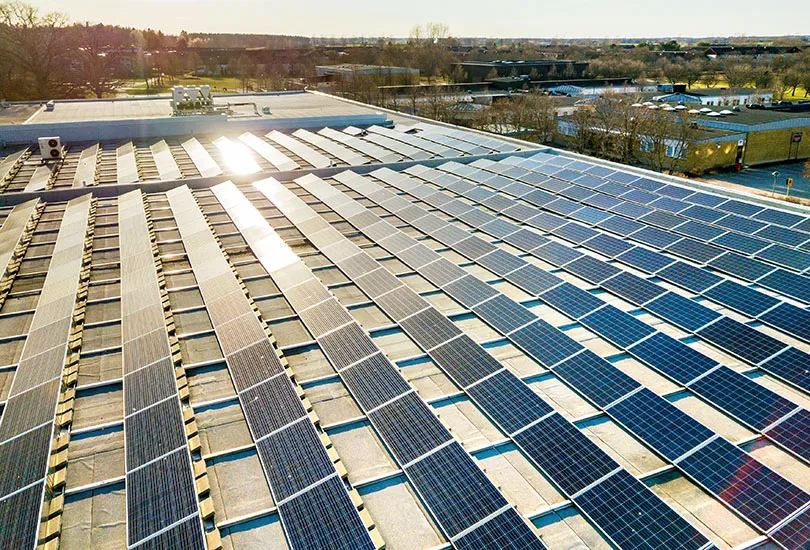
The PV yield next to the weather station and the meter: what the roof produces, what the building draws, and whether the ratio matches the forecast. Figures your sustainability reporting can draw on.
Sensor page: Energy -
Every room reports its temperature and whether anyone is in. A room heating for hours after check-out shows up as a list, not on the invoice, and the set-back can follow the booking.
Sensor page: Temperature -
CO₂, temperature and humidity where twelve people sit behind a closed door. Above 1,000 ppm the ventilation can step up early, and the curve is on file for building audits.
Sensor page: Air & Air Quality -
Daylight and presence per zone: lighting can dim where the sun does the work and switch off where nobody sits. The lighting circuit is often where savings show first.
Sensor page: Light -
Footfall at the entrance, anonymous. Cleaning, reception staffing and ventilation can follow the real visitor curve instead of the timetable.
Sensor page: People Counting -
Occupancy per level and the access gates: lighting and ventilation can run where cars actually are, and the barrier log shows who came when.
Sensor page: Presence & Access -
Temperature and humidity at the chilled-water pipes and in the server room, energy per circuit at the meter. Condensation and a running pump at night are reported without waiting for the technician’s round.
Sensor page: Humidity
The same site, run differently.
The energy certificate says A. The invoice says otherwise.
Consumption per floor and plant, continuously, with the gap to plan on one chart.
The meeting room feels stuffy by eleven and nobody knows why.
CO₂ per room, a message before the limit is reached, ventilation that can react.
A hotel wing at 30 % occupancy runs like a full house.
Heating and cooling can follow presence. Empty rooms show up on the list, not on the bill.
A week per quarter stitching the ESG report from three systems.
Readings for LEED, BREEAM and ESG reporting, ready to export.
Proof
-
Haus der Digitalisierung Tulln
Rooms, access, energy, weather and the green façade on one platform: how Lower Austria's House of Digitalisation in Tulln runs its building with baiond.
In use at and in partnership with


Your industry guide
One PDF for your industry: the questions baiond answers there, the sensors that measure it and what changes on site.
What managers ask before they start.
Do I have to replace my building automation?
No. The baiond Gateway reads the existing BMS via BACnet, KNX, Modbus or M-Bus and adds wireless sensors where the building has none. The automation keeps running; baiond sees what it sees, plus the rooms it never measured.
Which readings count for LEED, BREEAM or an ESG report?
Energy per meter and circuit, CO₂, temperature and humidity per room, occupancy and water. baiond stores them continuously with timestamp and source, so an auditor gets a curve for the period, not an average from a spreadsheet.
Can baiond tell me which rooms are heated while empty?
Yes. Occupancy and temperature per room are read together; a room that is warm and empty for more than an hour appears on the list. For a hotel that means the wing with 30 % occupancy shows which rooms are heated for nobody.
How does the CO₂ alert reach the person who can act?
You set the threshold per room, for example 800 ppm for meeting rooms. When the value approaches it, the facility team or the room host gets a message with the reading, the trend and a recommendation, by e-mail, push or into an existing system.
How long does it take to equip an office floor?
The wireless sensors run on batteries and are mounted during normal operation; a floor is usually set up in a short time. Existing meters and the BMS are connected through the Gateway, usually without new wiring.
Who can see the data?
You decide per site and role: the facility team sees every plant, a tenant sees their floor, an auditor gets an export for the period. Hosted in the EU, no personal data: occupancy is counted, never identified.
Related industries
Same sensors, same questions, a different floor.
-
-
-



Ready to give your data a voice?
Thirty minutes with the baiond team about your site and your questions. No slides.
Request a consultation